
Connecting with the past one step at a time
Folklore dance is a way of expressing and embracing cultural heritage through dancing. It celebrates the retelling of stories passed down through generations, keeping the community in touch with their traditions and history. As the former heart of Cornwall’s copper and tin industry, Redruth boasts a thriving folk culture too. The brown/gold metallic colours in the costumes worn by dancers here testify to one seam of this.
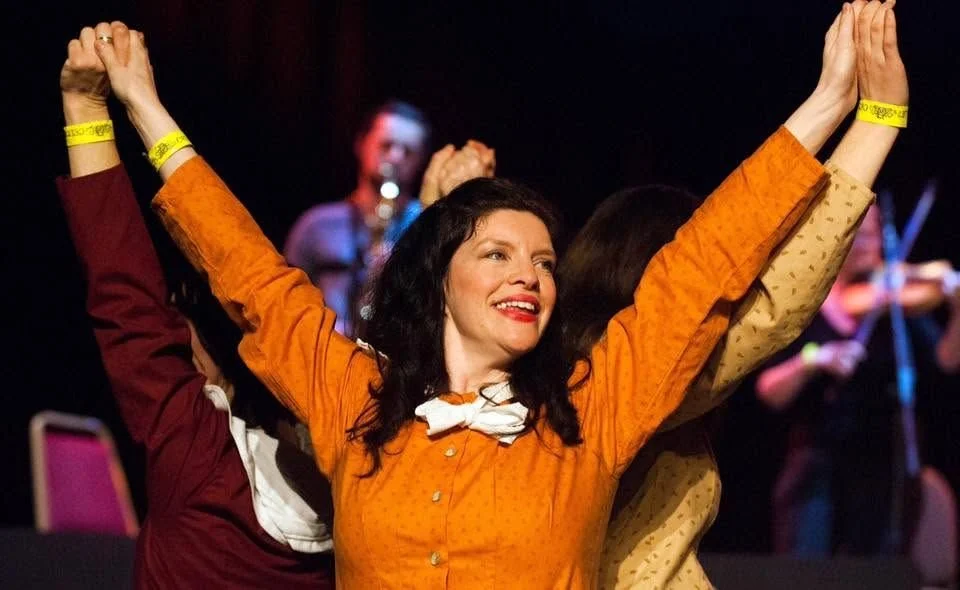
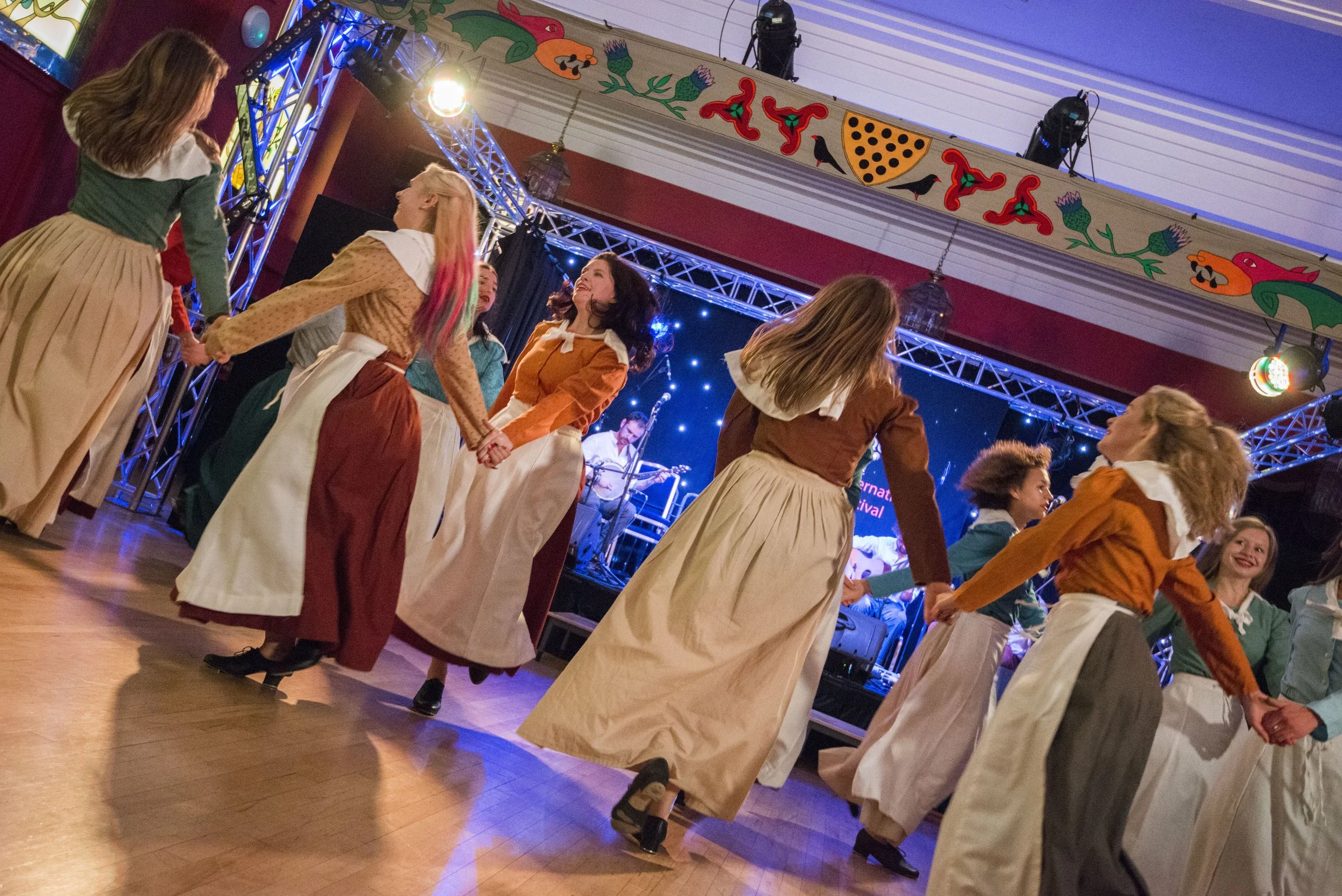
The May Fayre, Lowender Festival and Nos Lowen Nights all provide opportunities to watch and join in with Celtic dancing.
Jowdy Davey has grown up within this folklore community and has been dancing since she was four. Her family took an interest in collecting and reviving Cornish folklore dance traditions in the 1970s and 1980s. She is currently involved with Gwerin, a dance group based in Blackwater.
These dances root her in the community, she says. “They help you feel part of something bigger than yourself. I feel this even more strongly now that I have young children of my own who are learning these traditions. It’s a wonderful feeling to be helping pass these traditions on to future generations to enjoy like I have.”
Jowdy also appreciates the people she has met through folk dancing, including lifelong friends and even her now-husband. She appreciates that folk dance has opened many doors for her, including chances to “grow more confident” and develop a “strong sense of pride in cultural heritage”. Cornish dances are even known all the way out in Brazil and Australia, where many miners emigrated when the industry fell into decline here.
This sense of connection is found on feast days or just by attending a social gathering to dance, she says.
One of her favourite folk dances is The Broom Dance. Performing it brings Jowdy a sense of nostalgia, since she still owns a broom she used for this dance 40 years ago on the Isle of Man. Nowadays, her children dance with the same broom.
From a choreography perspective, Jowdy loves the Three Hand Reel. She revels in its polka rhythm, saying how it “can’t help but make you get up and dance”.
Folk dance has always been a part of Cornwall, but Jowdy explains that the idea of a cohesive Cornish dance repertoire or a Cornish dance team for performance mainly came about in the 1960s and 1970s. This emerged at a similar time as the revival of the Cornish language, and the emergence of special festivals like the Lowender Peran.
This renewed love of Cornish culture sparked the development of new dances for current and future generations to enjoy.
Like many things, the traditions change and adapt to fit the present, but the message is still the same: “With all folk traditions there’s been a steady evolution, in response to changing needs of the community or demands of events.
“For example, step dances have had to evolve from being performed in small spaces in a pub or someone’s kitchen, to huge stadium stages at the Lorient InterCeltic festival in Brittany.”
Cornish folk dancing is easy to join, according to Jowdy. She encourages people to say ‘hello’ to her group, Gwerin.
More information about the group can be found at www.gwerinkernow.com.
