
Young people these days…
Redruth-based folk trio Kessenyan are making an impact with their creative takes on traditional sounds. But if you turn up expecting to see some older men in beards, you’re in for a shock. MARLA PAYNE finds out more...
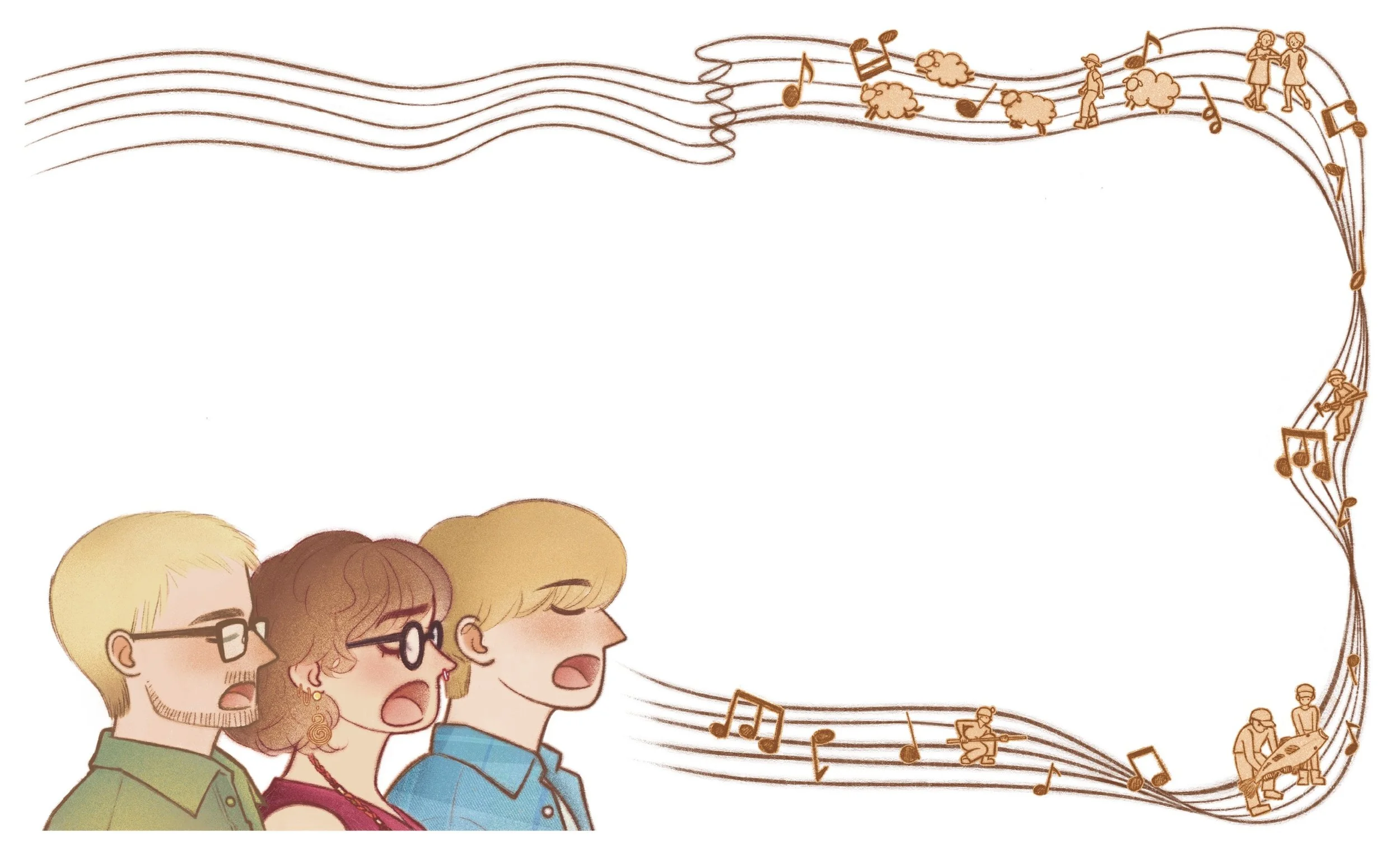
When most people picture folk music, they probably imagine white-bearded folk wielding fiddles and accordions. While this may be true for some traditional music groups, Kessenyan, an acclaimed three-part vocal outfit based in Redruth, doesn’t fit the stereotype.
The group is composed of three young singers – uncle and nephew, Harry (21) and Ollie Kessel (17), and their friend Ruby Gillson (19). The name itself means ‘harmony’ in Cornish, and the group are a cappella – creating music with only their voices.
Harry says folk music has been a key part of his life from a young age. “Originally, I got into singing because of my dad, who was in the folk scene for a long time and performed in a group called Jinx’s Stack, who were fairly famous,” he explains.
“So I started singing at age four, and then took a break for a little bit before I started singing again at a pub called The Countryman, at shanty night.”
Ollie took inspiration from his uncle and the two paired up with Ruby, encouraged by Cornish singer and founding member of Figurehead, Mel Babb, to form Kessenyan.
Despite having ‘not a lick’ of formal training, the group soon became extremely successful on the Cornish folk music scene, performing at festivals and events across the county and beyond – including Falmouth International Sea Shanty Festival, Mevagissey Shanty Festival and Sidmouth Folk Festival, one of the biggest folk festivals in the UK.
They even supported folk legend Martin Carthy at the Launceston Folk Club in late 2024.
In a typical show, Kessenyan perform 15 to 20 songs, including well-known numbers such as the sea shanty Santiana. But Ollie explains that they also try to keep the music fresh and interesting. “We stick to lyrics and ideas, but we do put our own twist on songs and make our own arrangements,” he explains.
“That’s how traditional music is – it evolves through whoever’s singing it.”
Although they don’t currently sing in the Cornish language, they suggest that it could be on the cards in the near future, hinting at a partnership with some local folk dancers.
Despite their success at sea shanty events, the trio has decided to move away from shanties towards exploring other traditional music. Says Ollie: “I think sea shanties are quite predominant nowadays and we’re trying to get the other traditional music, that’s less well-known, out there and heard.”
Harry adds: “Part of it is us wanting to improve ourselves as well. We want to push ourselves more in the folk genre, and arrange different harmonies for that, so our personal interest has just shifted over the years.”
This shift has proven to be successful so far, as Kessenyan were shortlisted for the final round of New Roots, a folk and traditional music competition for young musicians in St Albans.
However, with all three being students at college and university, the trio have had to learn to balance their new- found success alongside other commitments. Harry is creative in more ways than one, and is a keen photographer, studying Marine and Natural History Photography close to home at Falmouth University. “It doesn’t feel like a chore – we enjoy doing it! So it’s less about making it work, and more just doing it when we can, and loving it when we do it.”
They are passionate about encouraging other young people into the folk music scene, and recently took part in an initiative alongside other young musicians throughout Cornwall and Devon. They put together an event called The Dawn Chorus, a musical showcase for young folk musicians, including up-and-coming Cornish artists Karenza Lily-May, based in Padstow, and Eva Reeves from Falmouth.
Following The Dawn Chorus’s success, Kessenyan came together with four others from the showcase to form a larger instrumental singing group called Woodkern. They emphasise the importance of inspiring other young people to perform and engage with traditional folk music. Explains Ollie: “It’s such an old tradition – most of the people who are into folk music, and playing folk music, are over the age of 50 or 60. So in 40 years, there’s not really going to be any folk music left.”
Harry adds: “Some of these songs are hundreds of years old. To think that we could be the last generation to sing them is quite a harrowing thought. The best thing you can do is get out there singing, whether that’s in a pub or singing in your car!”
*You can find the trio on Facebook and Instagram under the name Kessenyan.
ILLUSTRATIONS FOR ABOVE BY XINYI ZHOU
