
The ’Druth is out there
People from the Redruth area have shared their culture and know-how all over the world. The town maintains a special relationship with three places in particular: two beyond the Atlantic Ocean, one just across the Channel. MILA CURLIN talks to those keeping these links alive with ‘twins’ in Mexico, the US and France
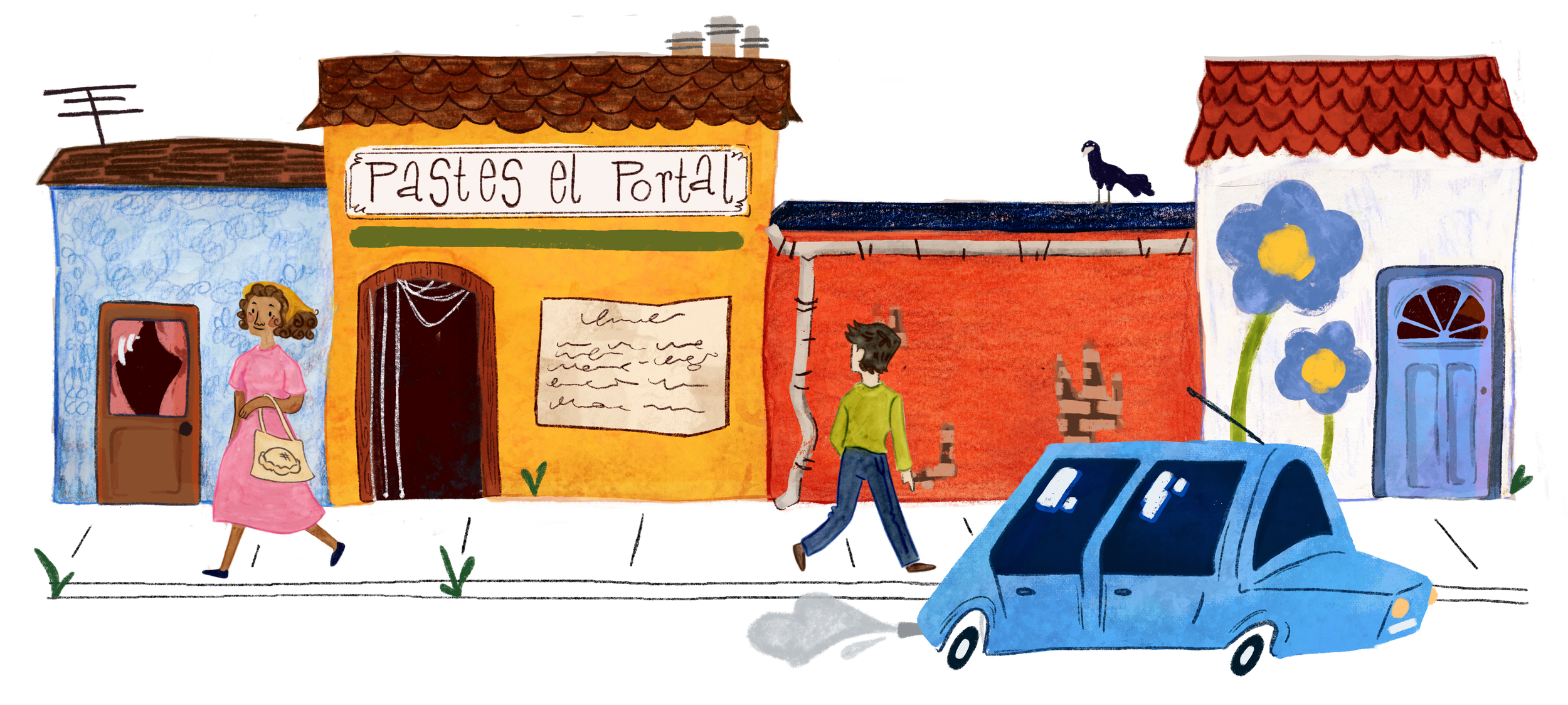
REAL DEL MONTE, MEXICO
On a hill above Real Del Monte – a small mining town in the Mexican state of Hidalgo –lies the Panteón Inglés, also known as the Cornish Cemetery. All gravestones there bear English inscriptions, and many list Cornish towns as birthplaces, with the earliest dating back to 1834. Most people buried in this unique graveyard were Cornish miners, their families and descendants.
How did the Cornish end up having a cemetery in this little Mexican town? And why are there so many pasty shops?
After the Mexican War of Independence ended in 1821, the mining industry stagnated, with mine shafts and tunnels damaged and flooded, causing the Mexican government to look to Britain for help. The Cornish were well suited for the job, and miners – many from Redruth – sailed from Falmouth Harbour to Mexico in the following years, especially after many tin mines in Cornwall were closed during the 19th century.
They brought new machinery, expertise and fortune to Hidalgo’s mines. Some, like Francis Rule, made a fortune by using pumping equipment to explore abandoned mines.
Many miners ended up staying in Real del Monte for good. As they couldn’t be buried in Catholic soil, the separate hilltop cemetery was created – a silent testament to their journeys and origin.
In the town itself, the Cornish influence is visible to this day, manifesting in the style of mine buildings and residential architecture. Real del Monte was nicknamed ‘Mexico’s little Cornwall’, alongside neighbouring city Pachuca, Hidalgo’s capital.
The 2008 twinning between Redruth and Real del Monte was instigated by Cornish miner Richard Williams, who founded the Cornish Mexican Cultural Society and was awarded an MBE for his efforts to build links between Cornwall and Mexico. Redruth’s then town crier Alan Jewell signed the twinning charter on behalf of Redruth Town Council.
“Redruth is the only town in the United Kingdom that is twinned with a town in Mexico,” claims Manny Hernandez, who is the chairman of the Redruth-Real Del Monte Twinning Association. He was asked by Williams and Mexican visitors to set up a formal twinning organisation a few years after the twinning agreement, at Redruth’s first International Mining and Pasty Festival. “What they wanted was an actual, true association that would work towards the relationship between our two towns.”
Visits are mostly arranged to attend each other’s pasty festivals. “That’s extremely important for us,” Hernandez said. “But we need to really work on all the other things”.
In future, they would like to be able to bring young people to Redruth as part of a student exchange, and send students to visit Mexico.
Hidalgo and Cornwall are surprisingly similar in many respects. Both regions were shaped by a strong mining tradition, and eventually turned to tourism after the closure of the mining industry, in order to sustain their economies.
The twinning is not only based on a shared history, but an intertwined culture that prevails to this day. The pasty, also called “paste” in Mexico, is popular in Real del Monte. After the decline of the mining industry, new sources of income were required, and now the town showcases a couple of dozen pasty shops, alongside the only pasty museum in the world, despite having a population similar in size to Redruth.
Real del Monte prides itself on making the world’s biggest pasty during its widely popular annual International Pasty Festival, which in turn inspired Redruth’s pasty festival. “The Mexican government designated Real del Monte as the birthplace of the pasty in Mexico,” Hernandez says.
Seeing Cornish flags or the Redruth town emblem is not a rarity in the town. “They take a lot of pride in the history between Redruth and Real Del Monte.”
The Cornish are also credited with the introduction of football in Mexico. Although the country’s first football club was founded in Pachuca, it originated in the mining community of Real del Monte, where it gained popularity as a pastime. “The very first football games played there by the Cornishmen and the Mexicans were actually in Real del Monte, and that football pitch is still there,” Hernandez says.
However, this is not simply a story of Cornish miners leaving a cultural mark on Mexico, but rather one of mutual exchanges threaded through the histories of both communities. A 1940 entry in Frank Michell’s book Annals of an Ancient Cornish Town: Redruth, records Cecilia Teague, aged 99, who remembered seeing miners wearing Mexican sombreros in Redruth Market as a young girl.
MINERAL POINT, WISCONSIN, US
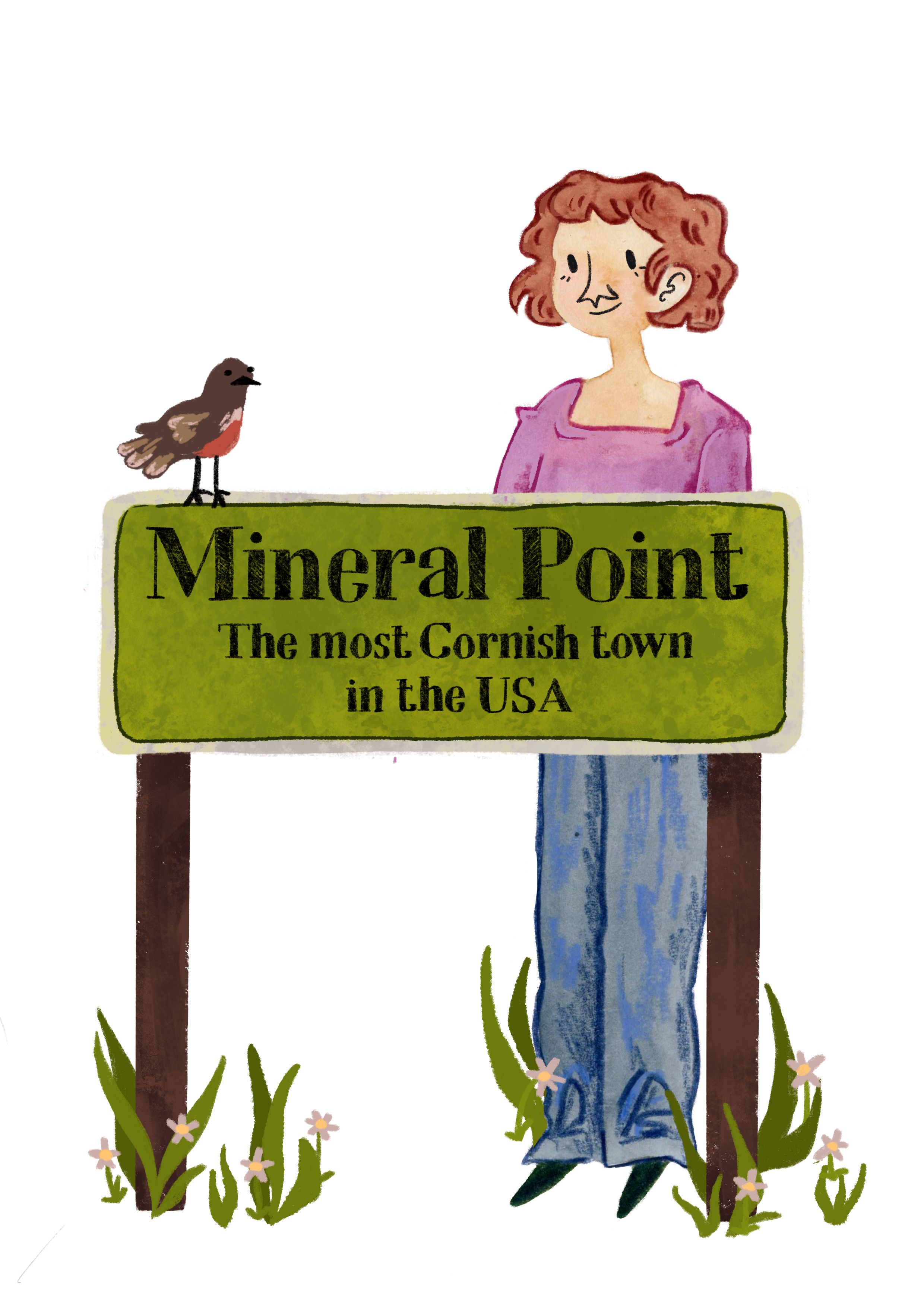
Mineral Point in Wisconsin was first settled in the 1820s, and because of its rich zinc and lead deposits, the area became a popular mining centre in the years that followed. It didn’t take long for this information to reach Cornish ears, and many miners from the Redruth area consequently emigrated to the city from the 1830s until the early 1900s, in search of a better life.
Although a lot of miners left again during the California gold rush, there are still many Cornish descendants living in Redruth’s sister city today.
Both places have their own histories and differ in many ways, but they also have much in common.
For example, Mineral Point has a much smaller population than Redruth, yet the Cornish-style architecture, presence of pasty shops and many people with distinctly Cornish surnames are all proof of the major influence Cornish immigrants had on the place. A creek in Mineral Point is said to have run red from the mining pollution in the past, which is strongly reminiscent of Redruth.
The US city was home to one of the largest groups of Cornish people in Wisconsin, and has been called “the most Cornish town in the US”. The year 1935 saw the start of the restoration and preservation of some of the Cornish homes, an attempt to preserve the tangible symbols of Mineral Point’s history. All the restored houses were given Cornish names, such as Pendarvis and Trelawny House.
Today, the entire historic site is called Pendarvis, and consists of several houses originally built by immigrant miners and Cornish stonemasons.
In 1991, Mineral Point resident Jim Jewell – unrelated to the secretary of the Redruth-Mineral Point Twinning Association, Alan Jewell – set up the Southwest Wisconsin Cornish Society, and two years later the annual Cornish festival was founded, which runs to this day. Mineral Point and Redruth were twinned in 1997, after a visit to Cornwall by Jim Jewell, who had researched the strong connection between them.
Most Cornish miners who settled in Mineral Point were from Redruth, whereas miners from Camborne settled in the neighbouring village of Linden. “Camborne and Redruth just don’t mix,” ‘our’ Jewell (Alan) says, with a laugh. “It’s a friendly feud in a lot of ways.”
When the deputy mayor of Redruth visited Mineral Point to sign the twinning charter, Jewell accompanied him as the town crier. Now, he is one of the last members of the American twinning association. He describes the American twinning as mostly dormant at the moment.
“The problem is the miles between us. You don’t go over there for a weekend, you’ve got to go for a fortnight’s holiday. It’s expensive.”
Occasionally, people from Mineral Point will visit Redruth. “They come over here more often than we go over there,” Jewell says. Last year, 14 Americans came over and he organised coach tours for them.
He says that the strength of the twinning lies in student exchanges. Every year he hosts students from Mineral Point, and takes them on heritage tours.
PLUMERGAT AND MERIADEC, FRANCE
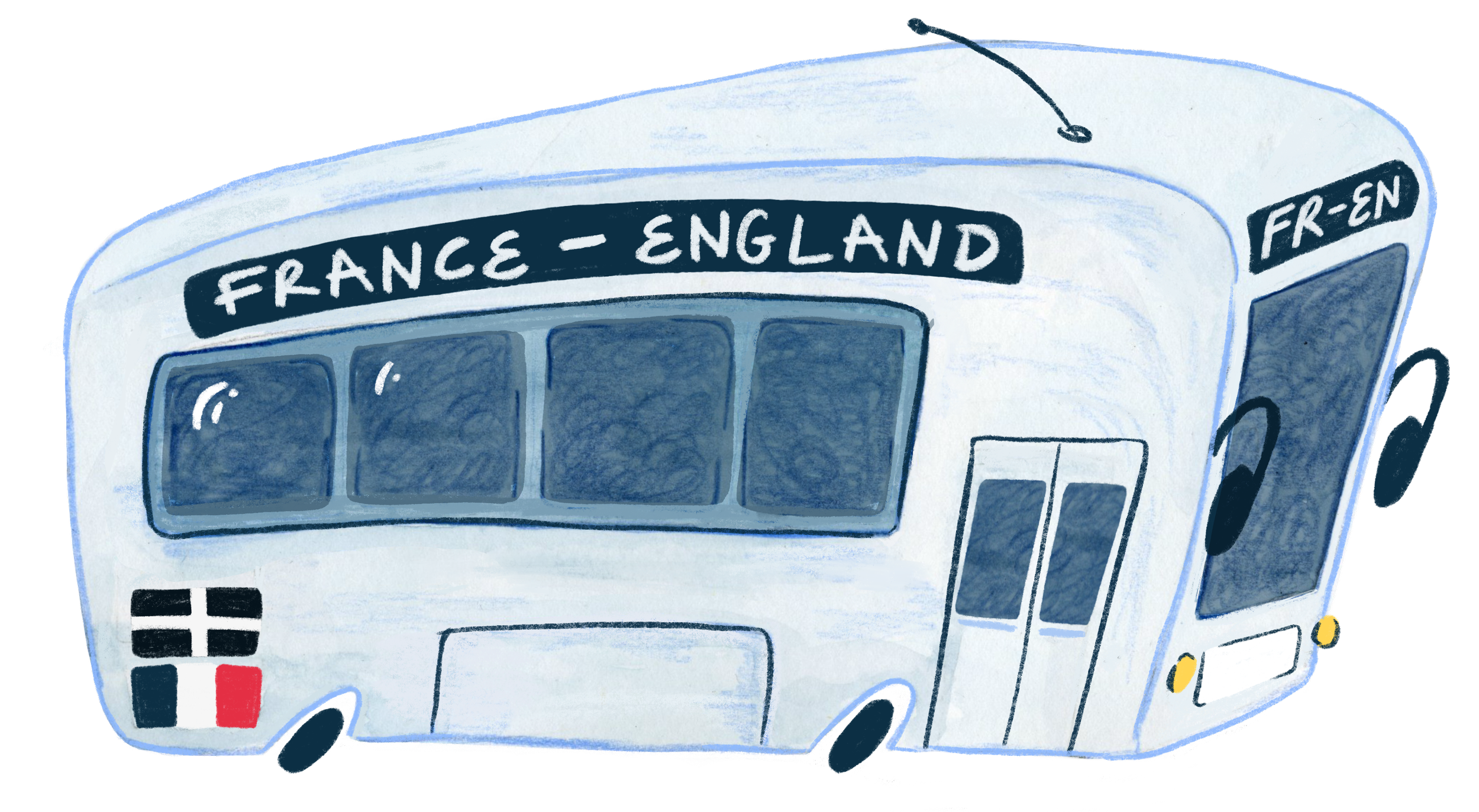
The distance to Redruth’s first twin is the shortest, as it’s located in Brittany, France. The twinning charter with Plumergat and Mériadec was signed in 1993, on the very first Murdoch Day in Redruth, and the reciprocal signing followed a year later in Plumergat.
The connection between the towns is strong, even now, over 30 years later. “If I go on holiday, very often I’ll go to Brittany and I’ll go and see my twinning family over there,” says Alan Jewell, the current chairman of the twinning association. “They get most annoyed if they know that I’m within a hundred miles and haven’t come to see them.”
Annual exchanges are organised by the association. “They come over one year, we go over there the next year,” says Ronnie Moyle, a member of the association committee and past chair. This year, 24 members are set to visit the two French towns, having hosted 28 people in Redruth last May.
Most families are still twinned with the same families they were linked with at the very beginning. “We’ve seen their children grow up, we’ve gone over there for marriages, we’ve even gone on holiday with them. They’re very, very close,” Moyle says.
It all started back in 1988, he explains, when the village of Mériadec invited Camborne to send over their junior football teams for a tournament they were hosting. After Camborne pulled out, Redruth and Illogan managed to send three teams over instead, and Moyle became involved because he helped to run Illogan’s football team at the time.
It was the beginning of a series of exchanges. Redruth Town Council suggested a twinning agreement a couple of years later.
The village of Mériadec initially considered itself too small for the twinning, and joined up with the commune of Plumergat, a place known for its rich religious heritage and many chapels.
But what does it have in common with Redruth? Even though Brittany has a mining history of its own, in contrast to the other two twinnings this connection is not so much based on intermingling mining histories, such as the Cornish moving there or vice versa, but rather on a shared Celtic culture and heritage.
“The Cornish language and the Breton language are so similar, you can converse with each other,” Jewell comments. The language barrier between the twinned families is less of a problem than you might think. Those who are unable to converse, still somehow get along perfectly well, and “they love you having a go at speaking French,” says Jewell.
Both he and Moyle stress they are desperate for new members, as the association is still being run by the same group of people there at the start of it.
They would especially like younger families to become involved, saying there is no better way for children to learn a language than by completely immersing themselves in it for a few days. Members of the twinning association are only expected to cover their travelling expenses, but are provided for in Plumergat and Mériadec. In return, the members are expected to do the same and host the French families when they visit Redruth.
“You make friends for life that way. It’s a wonderful thing,” Jewell adds.
ILLUSTRATION: ROXY CANVIN
