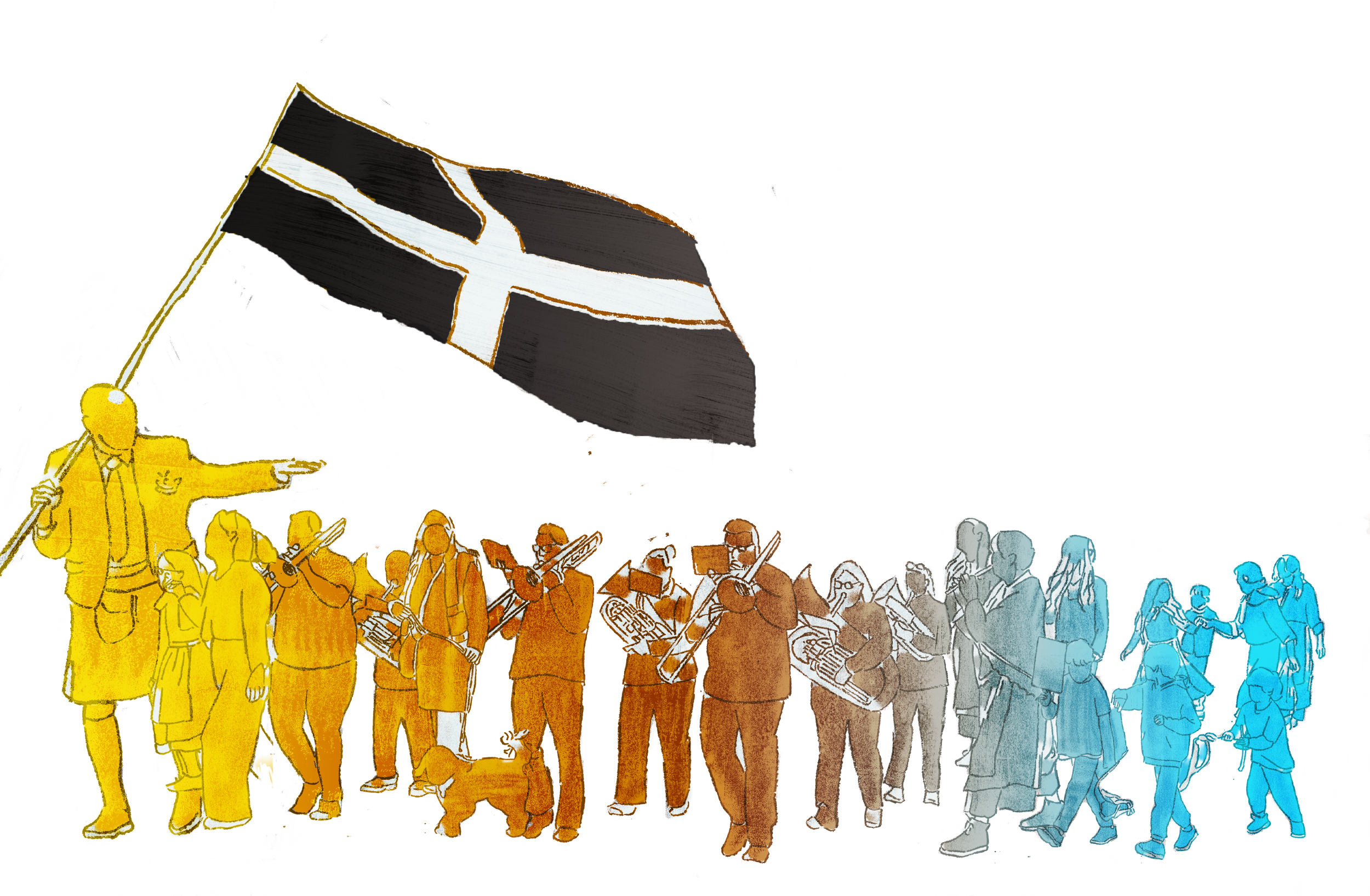
On the march for the tinners’ saint
Mila Curlin joins the St Piran’s Festival crowds in Redruth to explore the lasting power of Cornwall’s patron saint and the flag he inspired
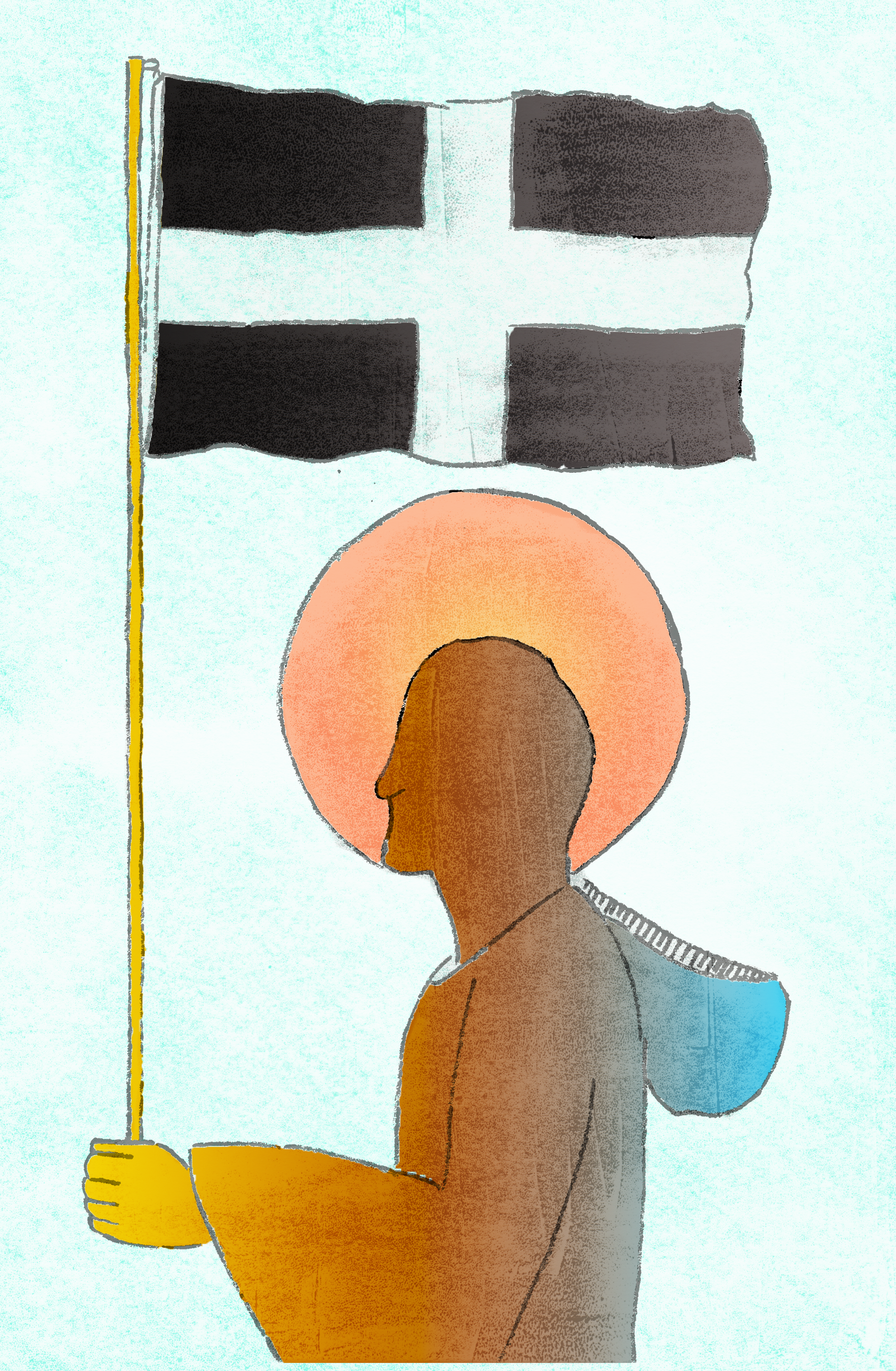
They say he floated here on a millstone, discovered tin, and lived for more than 200 years. But whatever the truth about St Piran, the enduring potency of his legend and the black-and-white flag which bears his name was again made very clear at Redruth’s St Piran Festival.
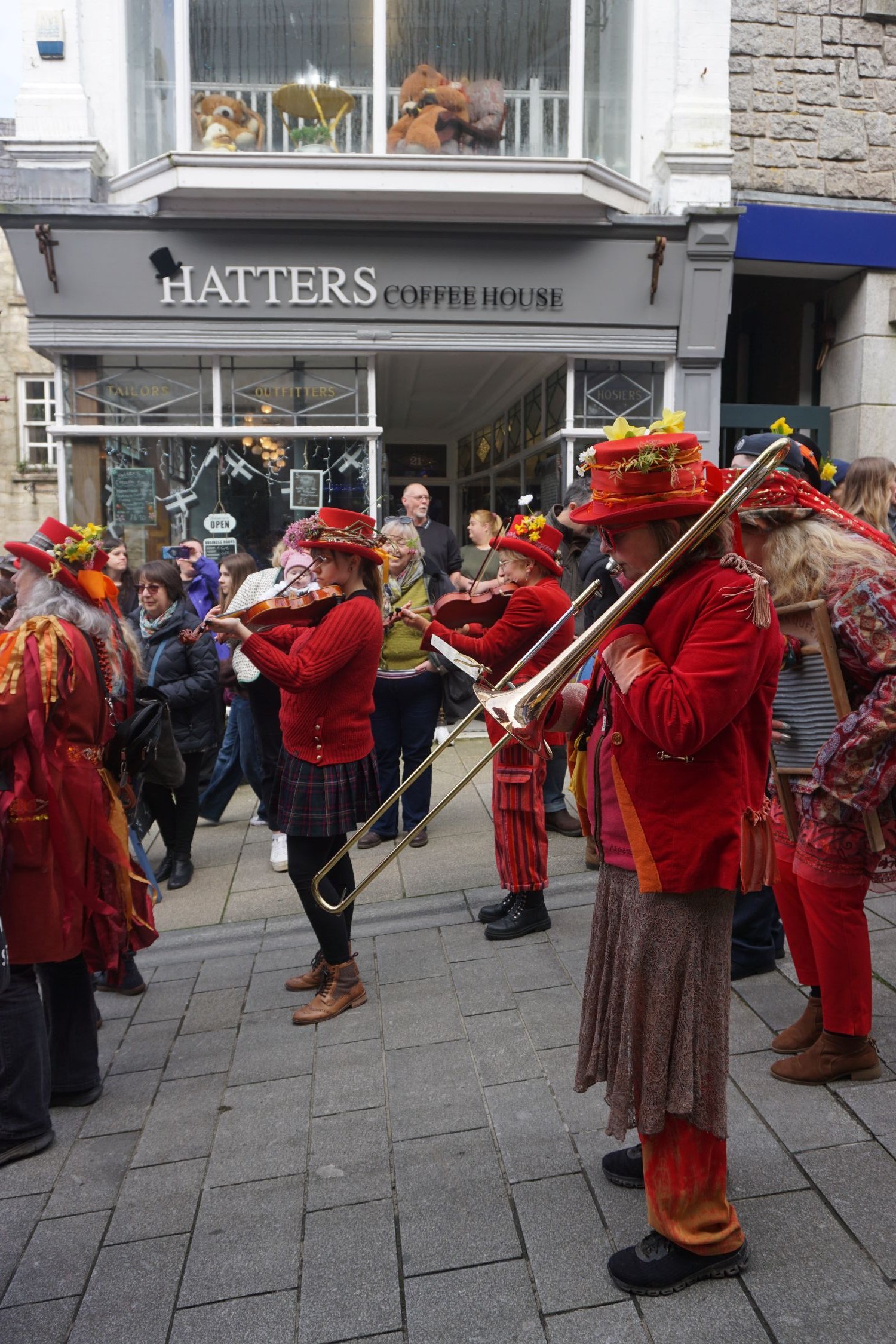
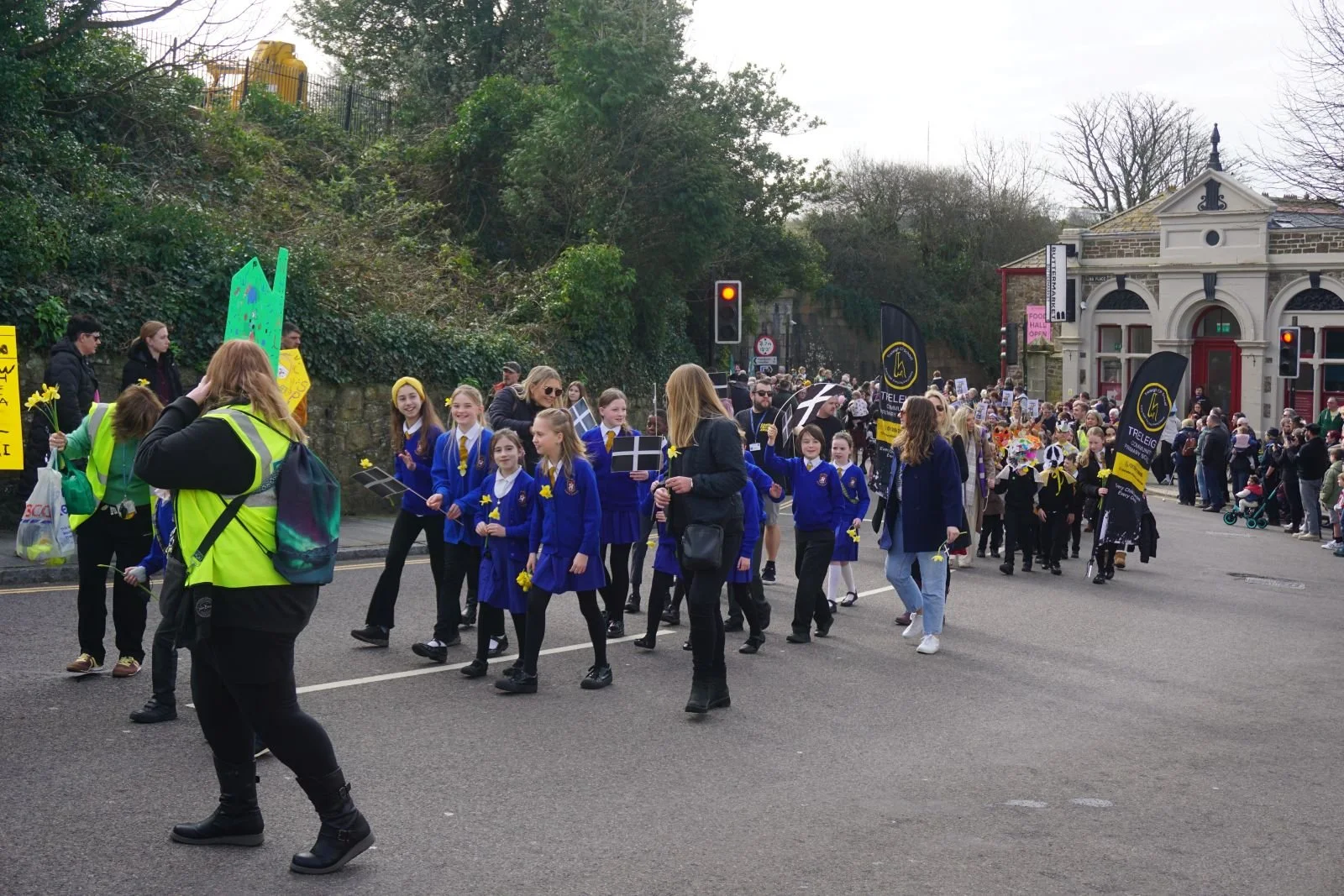
On the first Saturday after St Piran’s Day itself in March, colourful outfits and bright yellow daffodils brought the town centre to life, as everyone gathered to kick off the festivities with the parade and Trelawny shout.
Led by Redruth Town Band, the statue of Tolgus (the gigantic lamb), dancers, musicians and school groups with vibrant spring-themed decorations, slowly made their way onto Fore Street through a crowd of onlookers.
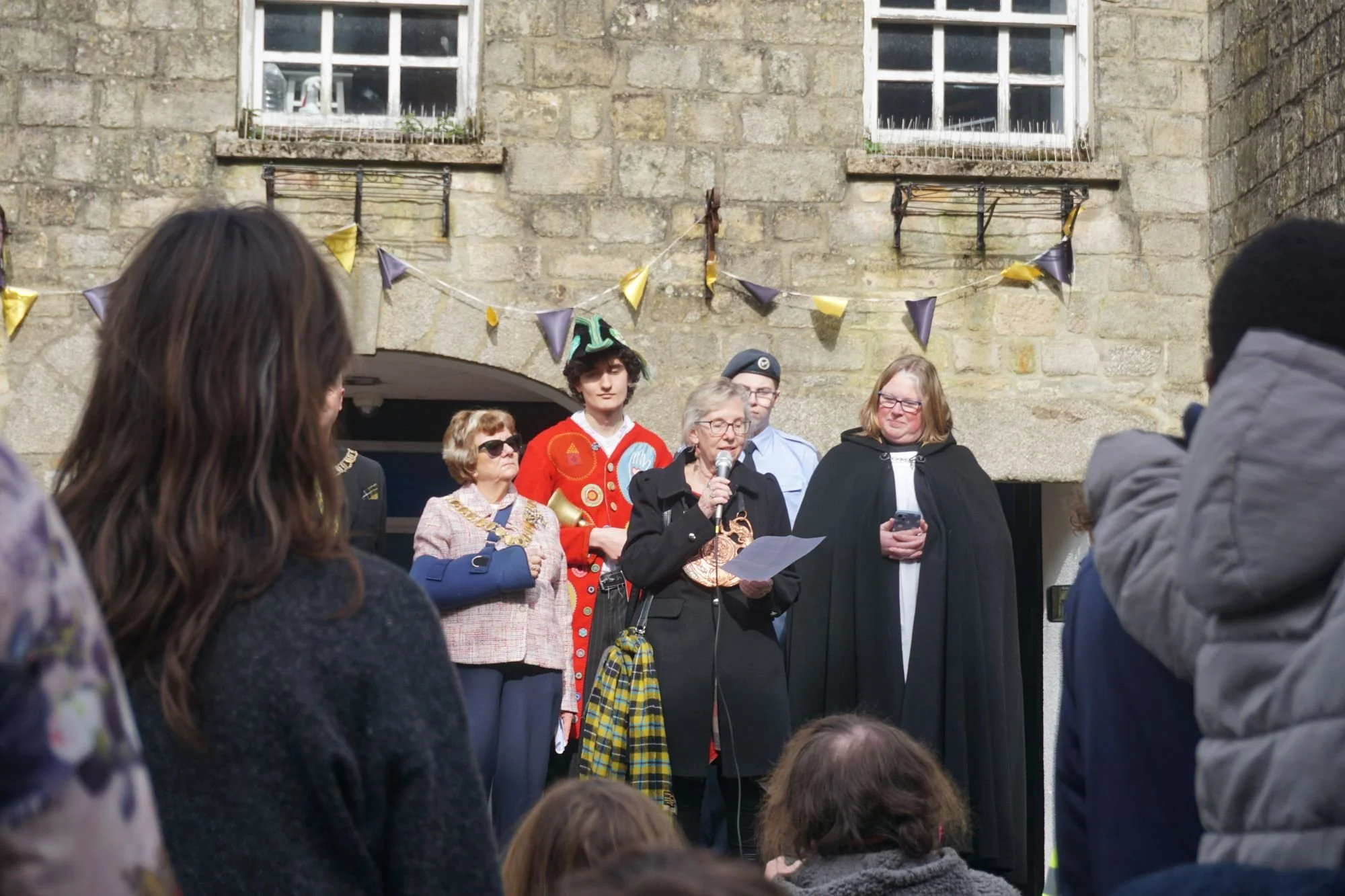
The procession broke up in front of Tatey Court after speeches by Town Mayor Alison Biscoe and Jenefer Lowe, Grand Bard of Gorsedh Kernow. There is much to celebrate this year, Lowe said, especially now the Cornish language has recently been given the same level of protection as other Celtic languages such as Welsh.
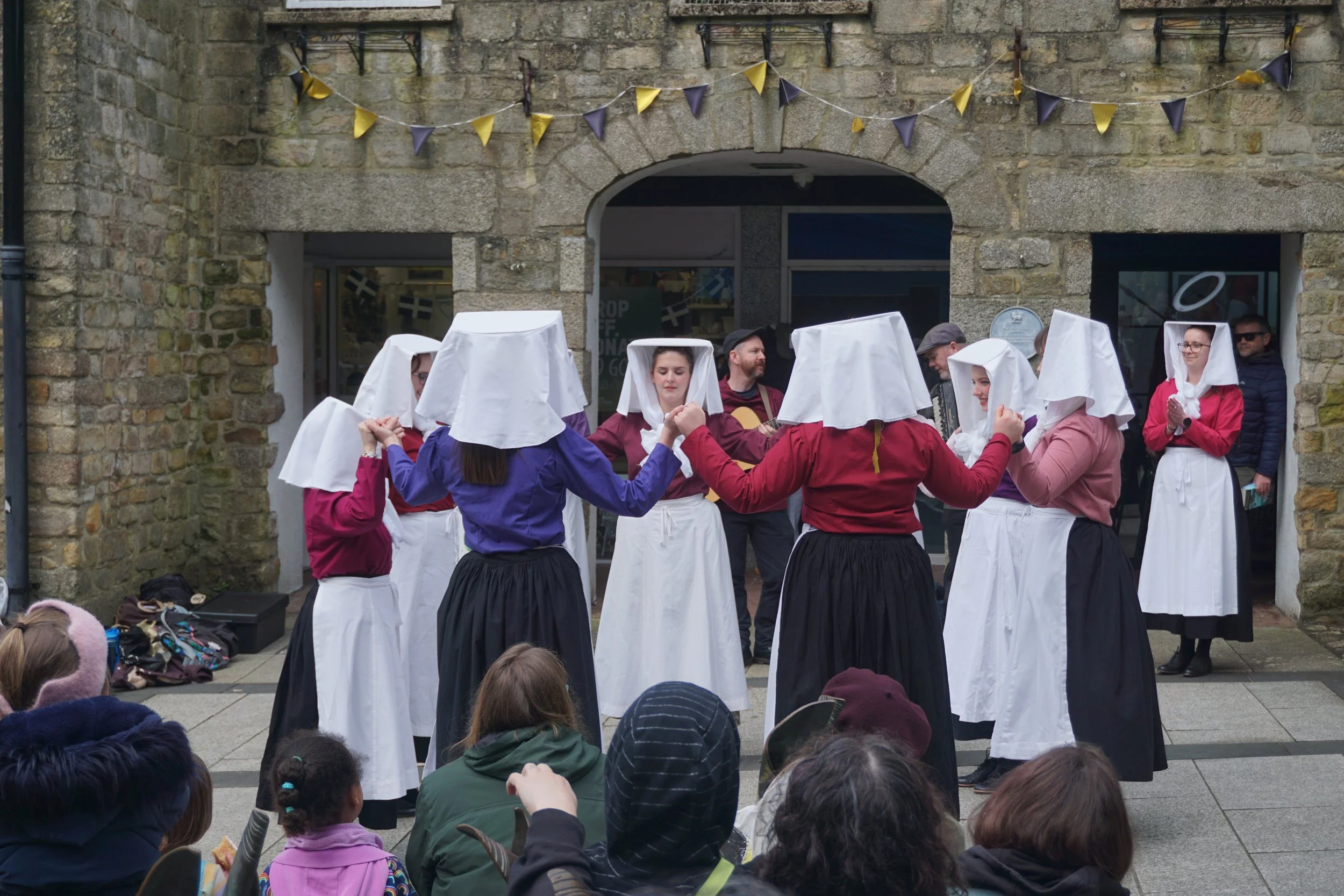
After the speeches, dancers claimed the free space, while children climbed onto the Tinners Hounds to watch. Others headed to Rowe’s bakery to join the queue for pasties.
Redruth has managed to grow its St Piran’s Festival into one of the biggest in Cornwall since it was first revived here in 2011. While dedicated to the saint, the festivities are mostly a celebration of a shared Cornish culture, history and community.
This year’s celebrations were spring-themed, but the bright colours were equalled by those symbolic of Cornwall. Even the odd dog, decked in Cornish tartan collars, proudly displayed their cultural loyalty.
Little is known about St Piran himself, also called St Perran, and there are different versions of the legend. He is said to have lived in the 5th century and eventually became the patron saint of tinners. According to folklorist Robert Hunt, he was an Irishman who was chained to a millstone by Irish Kings, and then cast into the Atlantic. The stone did not sink, however, and those who witnessed him miraculously floating away to Cornwall were converted to Christianity.
On March 5, he landed safely on a Cornish beach near what is now Perranporth, and according to some, proceeded to build a tiny oratory in the dunes of Penhale Sands. The ruins were dug out of the sand in 2014 and can be visited today. St Piran is said to have been buried there after living in Cornwall until the ripe age of supposedly more than 200 years. Today, over one-and-a-half millennia later, St Piran’s Day is celebrated in many a Cornish town and village.
Redruth is no exception. The Buttermarket area in particular proved to be one of the most popular places for residents and visitors. The building was renovated recently by Redruth Revival, and on this day, festival-goers gathered in the large courtyard to eat lunches bought in the food hall, the air filled with the smell of dishes like savoury and sweet crêpes.
“Come and see the market on Bond Street,” shouted the town crier in Fore Street, as the crowd thinned out. There, musicians at the band stand were still going at it, even though the stall in front of Ginger’s Diner was getting close to running out of stock.
The 2026 festivities also served as an opportunity to get people behind the town’s bid to become UK Town of Culture 2028. Part of this was a special screening in the evening at The Ladder, featuring Will Coleman’s film The ’Druth Is Out There and other Cornish films, the final event of yet another successful St Piran’s Festival here.